

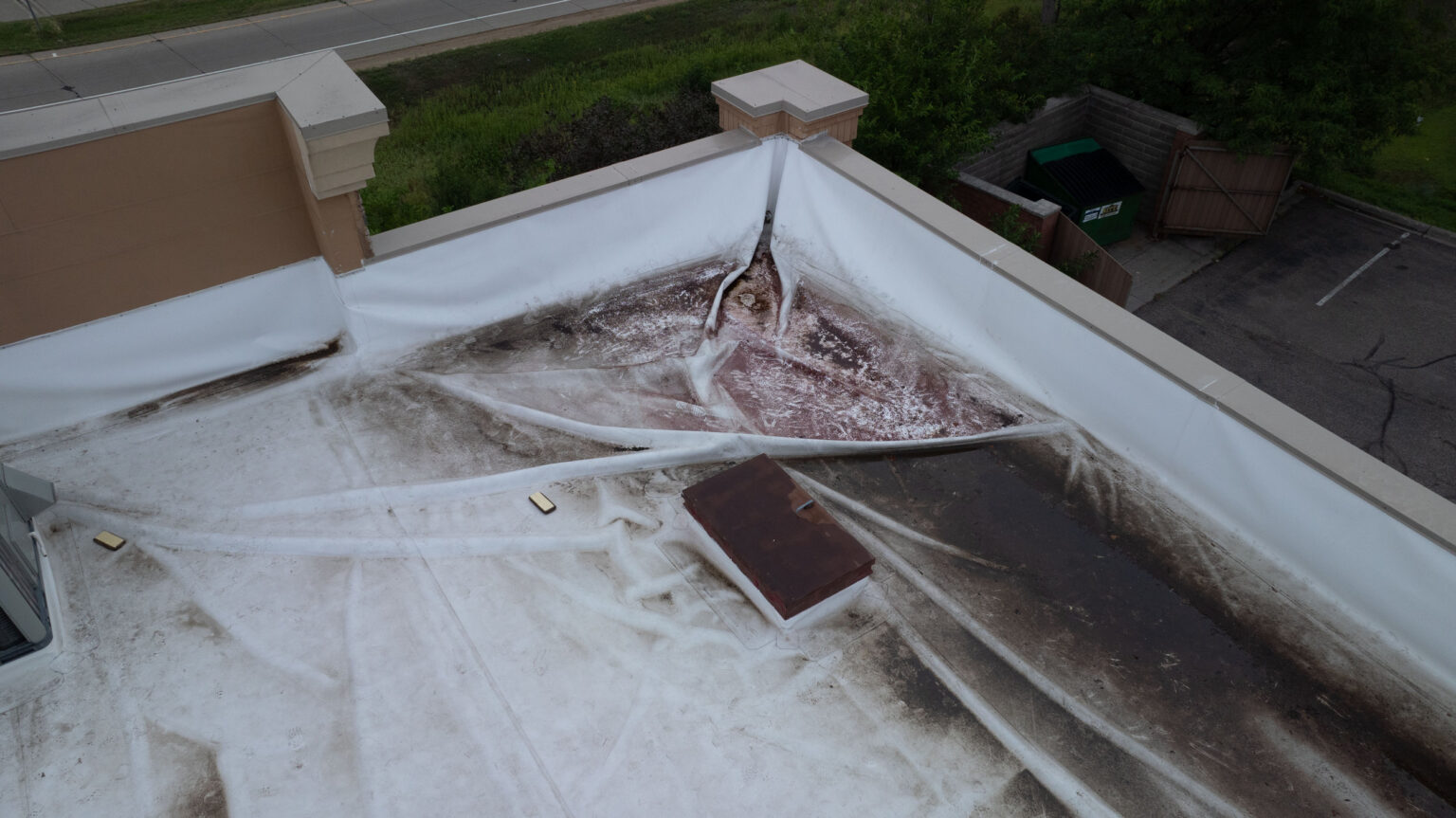
A commercial roof claim involves more moving pieces than the roof itself: the property manager, the insurance broker, the adjuster, sometimes a public adjuster, and whoever on the ownership side has to sign off on repair versus replacement. Coordination is the work of getting those pieces lined up before the roof inspection happens, so the actual site visit is productive instead of the first time anyone has looked at the roof's history.
We start by pulling together whatever roof records exist: prior repair invoices, the original system specification if it can be located, any past inspection reports, and warranty paperwork. That baseline matters because it shows an adjuster what the roof looked like before the storm event, which makes it much easier to isolate what actually changed rather than arguing about general condition.
Scheduling is a bigger factor than it sounds like. Roof documentation, drain and moisture checks, and photography all go faster with a few days of lead time instead of being compressed into the same morning as the adjuster's site visit. We coordinate our inspection window around your carrier's timeline and the building's tenant or operating schedule so access is not a last-minute scramble.
If you have already retained a public adjuster, we work alongside them rather than in place of them. Our documentation, technical notes on the roof assembly, and repair scope give the public adjuster the roofing-specific facts they need to build their case; claim strategy and negotiation with the carrier stay their responsibility, not ours.
Older buildings around downtown and the University District often come with a thinner paper trail, sometimes no original spec at all, which means more of the baseline has to be reconstructed from a physical inspection: core samples to identify layers, flashing details, and visible signs of prior patch work. Newer distribution and industrial buildings out along I-90 tend to have cleaner records, which shifts the coordination work toward scheduling access around active warehouse operations instead of record reconstruction.
Coordination also covers the handoff after the claim resolves. We keep the documentation, photos, and scope from the claim in the roof's file, so if a related issue comes up later, whether that is a follow-up leak or a future storm event, there is already a baseline record instead of starting from nothing.
A note on our role: we are your roofing contractor, not a public adjuster. We inspect, document, and substantiate the roof damage with photos, measurements, and moisture data so you and your insurance adjuster are working from the same accurate scope. Filing the claim and negotiating the settlement stay between you, your broker, and your carrier.
Coordination Questions
What is insurance claim coordination, exactly?
It is the roofing-side prep work that happens before and during a claim: organizing the roof's history and prior repair records, scheduling our documentation visit around your carrier's timeline, and making sure the property manager, roofing contact, and adjuster are all looking at the same information when the site visit happens.
Do you coordinate with our public adjuster if we already have one?
Yes. If you have retained a public adjuster, we work alongside them by providing our roof-condition documentation, technical assembly details, and repair scope. We stay the roofing contractor supplying facts about the roof; the public adjuster continues to handle claim strategy and negotiation.
How far in advance should we start claim coordination before the adjuster visit?
As soon as damage is suspected, ideally before the adjuster's site visit is scheduled. Roof documentation, drain and moisture checks, and pulling prior repair records all go faster when there is a few days of lead time instead of trying to compress everything into the same morning as the site walk.
What roof records actually help a claim move faster?
Prior repair invoices, the original roof system specification if available, any past inspection reports, and warranty documentation. Together they show the adjuster the roof's baseline condition before the storm event, which makes it easier to isolate what the storm actually changed.
Does claim coordination cost anything beyond the roof inspection itself?
The roof documentation and adjuster walkthrough are part of the standard claims process. Coordination work like organizing records or scheduling around your carrier's timeline is something we fold into that same engagement rather than billing as a separate service.