

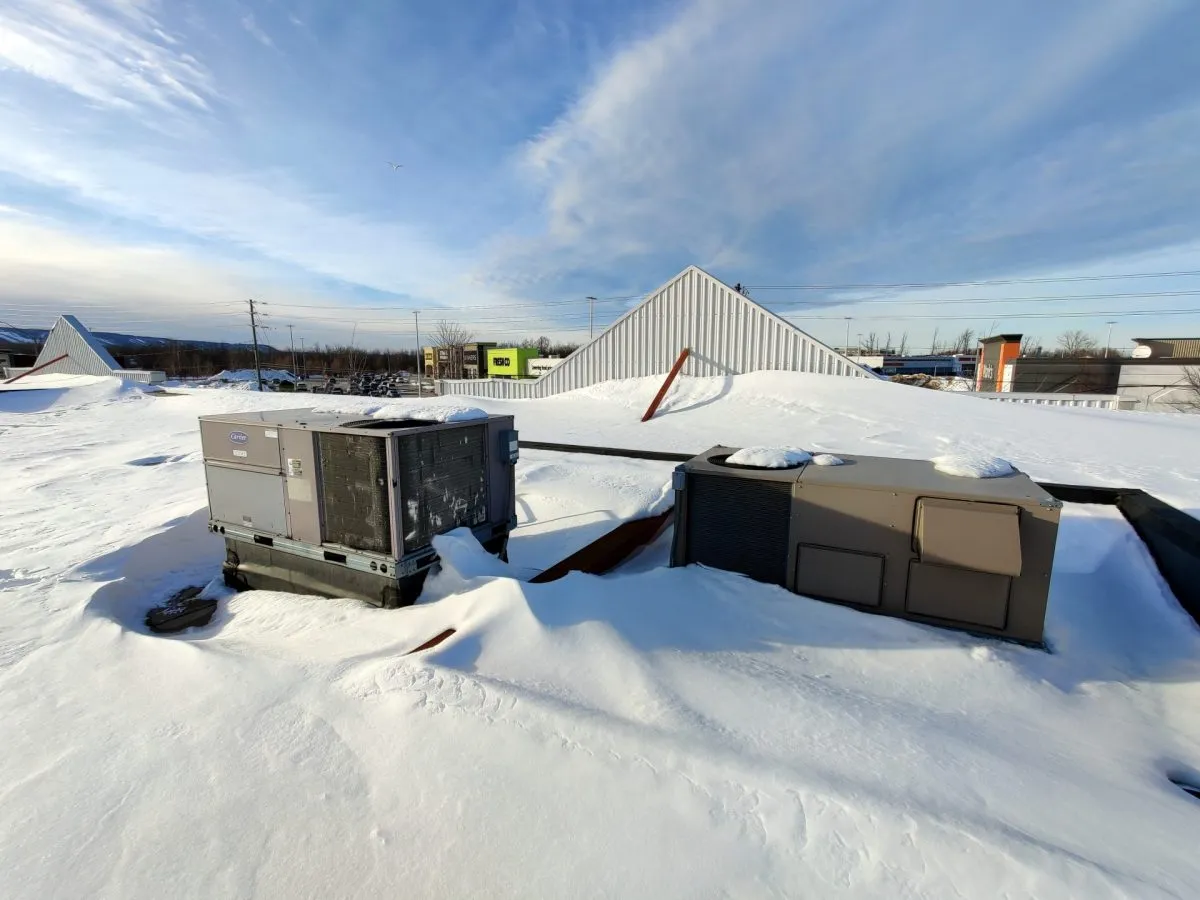
Inland Northwest winters put a different kind of stress on a low-slope commercial roof than a single storm event does. Snow load accumulates across days or weeks, freeze-thaw cycling works at every seam and fastener, and ice dams form wherever meltwater refreezes at a parapet, scupper, or drain. A snow-related insurance claim has to account for that timeline, rather than only the roof's condition the day someone finally walks it.
Spokane has seen winters heavy enough to strain flat commercial roofs across the region, including stretches in the late 2000s and the 2016-17 season when accumulated snow load and slow melt cycles pushed drainage systems and older membranes past what they were built to handle. Those seasons are a useful reminder that a roof can carry real structural and membrane stress well before a leak ever reaches the ceiling tile.
Ice damming is the mechanism we see cause the most disputed claims. Snow melts from rooftop heat loss, runs toward a drain or scupper, and refreezes at the cold edge, building a dam that backs water up under the membrane laps. By the time a leak shows up inside the building, the ice has often been doing damage for weeks, which is exactly why photographing the ice formation, rather than only the eventual leak, matters for the claim file.
Deck deflection is the other marker we document closely. A roof carrying more snow than it was designed for can show visible sag between purlins or joists, telegraphing through the membrane as ponding once the snow melts. We measure and photograph deflection while it is present, because a roof that has already been shoveled or has fully melted off can look deceptively normal in a later inspection.
Drainage condition drives a large share of whether a snow claim gets approved or gets flagged as a maintenance issue. A primary drain or scupper that was already partially blocked before the snow season reads very differently to an adjuster than one that failed under an unusual load. We document drain condition, overflow paths, and any prior service history so the file makes that distinction clearly.
Older brick commercial buildings around downtown and the University District often carry built-up or modified bitumen roofs with limited insulation and tighter parapet clearances, which makes them more prone to ice damming than a newer membrane roof with taller edge details. Newer distribution buildings out toward Spokane Valley and the airport business parks carry wide, flat membrane fields where an even snow load is less of a concern than a single low spot or clogged internal drain backing up under weight.
Once the roof dries out, we build the claim file around dated photographs of ice formation and deflection where we captured it, moisture readings at suspect drain and edge locations, and a written account of how the winter event produced the specific damage found. That file is what lets an adjuster connect a January ice dam to a February leak instead of treating the roof as generally old and worn.
A note on our role: we are your roofing contractor, not a public adjuster. We inspect, document, and substantiate the roof damage with photos, measurements, and moisture data so you and your insurance adjuster are working from the same accurate scope. Filing the claim and negotiating the settlement stay between you, your broker, and your carrier.
Snow & Ice Claim Questions
Does commercial property insurance cover snow load damage in Spokane?
Snow load and ice-related roof failures are commonly covered when the damage is tied to a specific weight event or ice-dam intrusion rather than gradual wear. Because snow load builds over days or weeks instead of striking in a single moment, the claim depends on documentation that ties the deflection or leak to the winter event, rather than an inspection conducted months later.
How is a snow load claim different from a wind or hail claim?
Wind and hail are sudden, dateable events. Snow load and ice damming are progressive: weight accumulates over a storm cycle, and ice dams form as freeze-thaw repeats at the roof edge. We document roof deflection, membrane stress, and ice-related leak points as they develop rather than relying on a single after-the-fact photo.
What does ice dam damage actually look like on a flat commercial roof?
Ice backing up behind a parapet, scupper, or drain can force meltwater under the membrane laps or through a compromised seam well before any deflection is visible. Interior stains near roof edges and around rooftop drains in late winter are often the first sign, even when the roof surface looks intact from above.
Can a roof be denied coverage for snow damage due to deferred maintenance?
Yes, and it is one of the more common reasons Inland Northwest snow claims come back underpaid. A drain that was already clogged, or flashing that was already failing before the snow season, reads as a maintenance issue rather than storm damage unless the file clearly separates the two.
What should we do as soon as heavy snow load is suspected on our roof?
Get eyes on the roof structure and drainage as soon as it is safe to do so, note any visible deck deflection, and keep drains and scuppers clear so meltwater has somewhere to go. We can document the load and drainage condition even before any leak appears, which strengthens the file if damage shows up later in the season.