

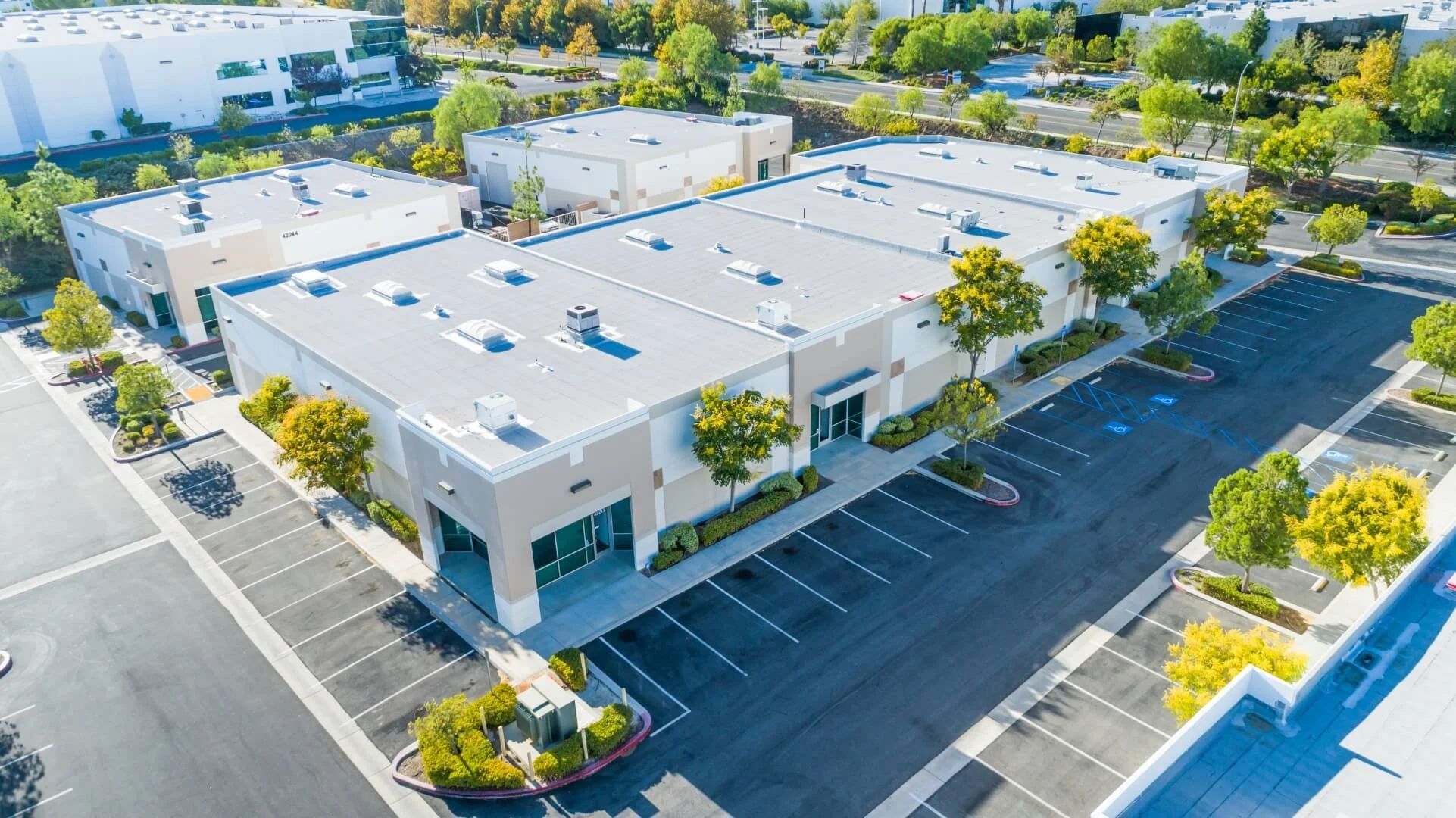
Food processing buildings are humid by design. Cookers, steam kettles, and the high-pressure washdown that sanitation crews run every shift load the interior air with moisture, and a lot of it wants to migrate up into the roof assembly. At the same time, big stretches of these plants run cold, chill rooms, freezers, blast cells, which means the deck above them sits near or below freezing while warm wet air pushes against it from inside. Get the vapor strategy wrong and you grow condensation, deck corrosion, and rotted insulation inside the assembly with zero leak showing on the ceiling. That hidden moisture problem is what we engineer against first on a Spokane food plant.
Spokane's food and beverage production sits mostly in the industrial belts. The Spokane Valley industrial area around Sullivan Road and Trent Avenue, the corridor built around the large business park north of I-90 with well over a hundred resident companies, holds a cluster of food, bakery, and beverage operations, and more line the rail-served industrial blocks along East Trent and out toward the airport on the West Plains. These are working buildings on tight production calendars, and we plan roofing around the plant's clock, not ours.
Refrigerated Bays Need a Roof Assembly Built for the Cold Chain
The roof over a freezer or chill room isn't a normal roof. It has to keep the thermal line continuous so the refrigeration system isn't fighting the weather and so the dew point doesn't land on the steel deck. In Spokane that means tapered insulation and a vapor retarder sized for the specific room temperatures and for the direction vapor actually drives in our climate, which, with cold interiors and cold winters, is not the textbook warm-climate case. We design the assembly over each refrigerated bay around its real operating temperature, because a generic detail here corrodes a deck from the inside out.
Heavy Rooftop Loads and Spokane Snow Stack Up Together
Food plants carry a lot of weight on the roof: condensing units and rack-refrigeration platforms, large exhaust and makeup-air units, and process equipment. Add Spokane's snow load on top of that and drainage stops being optional. Ponding over a freezer room is doubly bad, it loads the structure and it pulls heat into the cold space below. We lay out tapered systems and drains to clear water to scuppers and interior drains at the low point of each bay, and we confirm the drainage design fits both the snow load and the refrigeration layout above.
Materials and Schedule Both Answer to Food Safety
Above a production area the material list isn't open-ended. USDA- and FDA-regulated spaces require membranes, adhesives, primers, and sealants confirmed acceptable for use over food zones, and plenty of standard roofing adhesives carry solvents that aren't allowed in a production environment. White TPO and PVC single-plies are generally workable above enclosed processing areas, but we confirm the specific products against the plant's food-safety plan before anything goes down. Schedule is just as constrained: many Spokane plants run two or three shifts with a weekly sanitation window as the only time the line is down, so any work that opens the envelope over an active area gets confined to that window, with QA confirming the floor is clean and protected before we start.
Sanitation and Pests Make the Roof a Food-Safety Surface Too
On a food plant the roof isn't just weather protection, it's part of the sanitation and pest-control picture that auditors look at. Standing water, deteriorated flashings, and gaps at penetrations give birds and insects a foothold and create the kind of moisture entry points an inspector flags. Open seams or failed curbs above a production area can let condensation or debris drop toward the floor. We detail penetrations tight, keep the membrane draining clean, and provide condition documentation and repair records that a QA manager can hand to a USDA or FDA inspector to show the roof is being maintained proactively rather than reactively, which is exactly what those audits want to see.
When Something Goes Wrong Over a Live Line
A leak above running production isn't a maintenance ticket, it's a potential food-safety event with product holds and documentation attached. We keep an emergency dry-in response ready for these facilities, with priority mobilization and documentation support that fits the plant's incident reporting, so a sudden roof breach over a line gets contained fast and recorded properly.
- Engineer the vapor retarder and insulation for washdown humidity over cold interiors.
- Design refrigerated-bay assemblies around real room temperatures and Spokane's vapor drive.
- Size drainage for both heavy rooftop loads and snow load.
- Confirm every membrane, adhesive, and sealant against the plant's food-safety plan.
- Phase work into sanitation windows with QA sign-off before opening the envelope.
Food Processing Facility Roofing Questions
Can any roofing material go over a production area?
No. USDA- and FDA-regulated areas require the membrane, adhesives, primers, and sealants to be confirmed acceptable over food zones, and many standard roofing adhesives use solvents that aren't allowed. We identify the facility's regulatory framework and confirm material acceptability with the plant's QA team before specifying anything over a food contact area.
How do you schedule work around a running plant?
We build the phasing around the production calendar. With the facilities manager we identify the weekly sanitation window and any planned shutdowns when work over the floor can proceed, and work above refrigerated areas is coordinated with the refrigeration team so nothing disrupts the cold chain.
Why does the deck over a freezer matter so much?
Because warm, humid interior air meets a deck chilled by the room below, and if the vapor retarder and insulation aren't right for that condition, moisture condenses inside the assembly and corrodes the steel with no visible leak. We design the assembly over each refrigerated bay for its actual operating temperature and Spokane's vapor drive.
How do you handle drainage over refrigerated bays?
Ponding over a freezer adds structural load and pulls heat into the cold space, so we use tapered insulation to move water to perimeter scuppers or interior drains at the low point of each bay, and we confirm the drainage layout fits both the snow load and the refrigeration system above.
What happens if the roof leaks during production?
A leak over a live line means immediate contact with QA and facilities for product-hold evaluation and documentation. Our emergency protocol for food plants includes 24-hour contact, priority mobilization for temporary dry-in, and documentation support for the plant's incident reporting.