

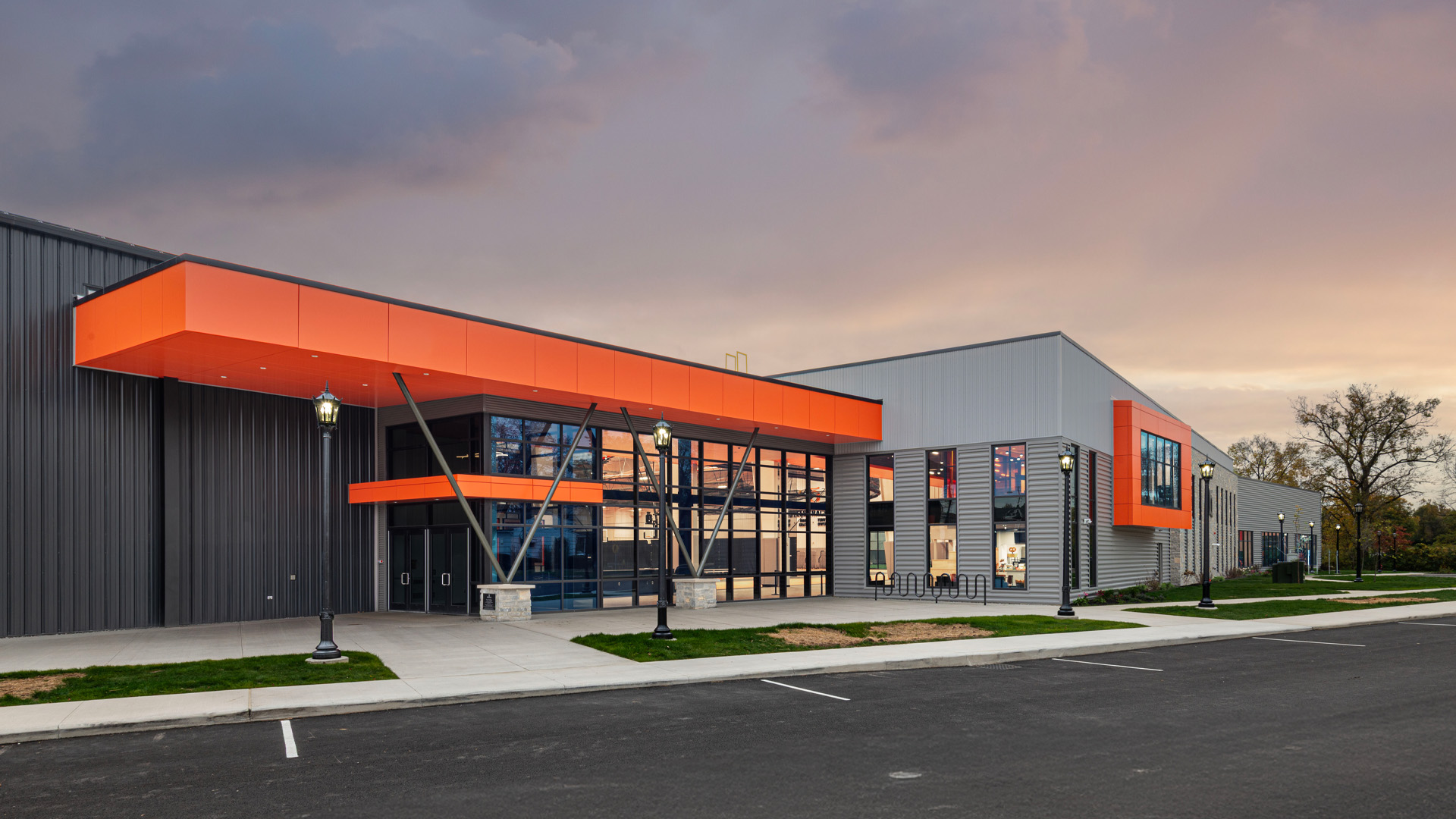
A mixed-use building isn't one roof, it's a stack of waterproofing problems sharing an address. Ground-floor retail, apartments or offices above, a parking podium tucked into the base, maybe a rooftop deck where residents grill on summer evenings. Each of those uses puts a different demand on the assembly above and below it, and treating the whole thing as one flat plane is how developers end up with five-year leaks and finger-pointing between trades. We scope these projects vertically, by use, and we coordinate the warranties so one number covers the whole envelope.
Spokane has seen real momentum in this category. The University District around the Washington State University health-sciences campus and Gonzaga, the redeveloping blocks of Kendall Yards on the north bank of the Spokane River, and the downtown core along Riverside and Main have all added mixed-use buildings that put housing and storefronts together. The University District Gateway Bridge stitched that medical-and-education quarter to the East Sprague corridor, and the kind of transit-oriented and adaptive-reuse projects that follow are exactly where this roofing work lives.
Podium Decks Are Not Flat Roofs
The single biggest mistake on a mixed-use building is treating the podium deck like commercial flat roofing. The podium is the slab between parking or retail at grade and the occupied floors above, and it has to carry foot or vehicle traffic, resist constant hydrostatic pressure in planter zones, take a root barrier where there's landscaping, and survive structural deflection without splitting. That's a traffic-bearing waterproofing assembly with drainage composite and protection board, not a single-ply membrane with a few maintenance walk pads. Spec a roofing membrane on a plaza deck and it typically fails inside half a decade, after the finishes are already on top of it.
We build the podium assembly in coordination with the structural engineer and the deck-finish contractor so the load path, the drainage, and the topping all agree with each other before anything gets buried.
Upper Roofs and Amenity Decks
The roofs over the top floors carry their own list: parapet drainage, mechanical penthouse flash-throughs, elevator overrun enclosures, and the amenity decks that have become a selling point on Spokane's newer residential buildings. A rooftop lounge or grilling terrace needs a traffic-bearing membrane under the pavers or topping, with overflow drainage sized for it, again, not the same as the standard low-slope membrane on the adjacent uninhabited roof areas. We keep those two systems distinct and flash the transition between them properly.
Working Above Occupied Tenants
Most of Spokane's mixed-use roofing isn't ground-up, it's re-roofing over occupied retail and residential. That changes how the job runs. Downtown noise limits govern start times, retail tenants need their entries kept clear and open, and residents above can't lose elevator access or wake up to a leak. We phase the work, contain dust and debris, confirm dry-in in writing at the end of every shift, and notify building management and tenants ahead of disruptive operations. We don't demobilize for the day until the open area is watertight.
What we coordinate on a mixed-use project
- Separate scopes for podium waterproofing, amenity-deck assemblies, and standard low-slope roof areas, priced and warranted distinctly.
- A single point of contact across the GC, MEP subs, structural engineer, and envelope consultant.
- A phasing plan that keeps retail open and residents undisturbed.
- Submittals, mock-ups, and inspection reports formatted to the lender's and developer's closeout requirements.
Warranties That Don't Fall Through the Cracks
Mixed-use buildings are where warranties get messy. One roof area might be a single-ply membrane under a 20-year manufacturer NDL warranty, the podium a separate waterproofing system with its own coverage, and the amenity deck a third assembly entirely. When those come from different manufacturers and get installed at different phases by different trades, a leak two years later turns into an argument about whose system failed and whose warranty applies. We map the coverage out at the start so the boundaries between systems are documented, the transitions between them are clearly the responsibility of one party, and the building owner ends up with a coherent set of warranties rather than a folder of overlapping certificates that each point at the next one. On a building that a lender and a condo association and a half-dozen retail tenants all depend on, that clarity is worth as much as the membrane itself.
Documentation Lenders Actually Ask For
Construction lenders and developers on mixed-use deals want a paper trail: architect-reviewed submittals, manufacturer technical approval of the specified systems, mock-up testing before full installation, QC inspection reports, manufacturer-rep site visits at the critical phases, and NDL warranty registration at closeout. We work inside that framework from preconstruction through final inspection so the roofing scope never becomes the thing holding up a draw or a certificate of occupancy.
Mixed-Use Development Roofing Questions
What's the difference between roofing and waterproofing on a mixed-use podium deck?
A roofing membrane is built for drainage and light maintenance traffic. A podium deck has to handle structural deflection, root intrusion from planters, constant hydrostatic pressure, and pedestrian or vehicle loads. That calls for a traffic-bearing waterproofing assembly with drainage composite and protection board. Using a standard roofing membrane on a plaza or amenity deck is the wrong specification and usually fails within five years.
How do you coordinate roofing work over occupied retail and residential floors?
With a phasing plan written before mobilization. We sequence work to keep retail entries open and residents undisturbed, contain noise and dust, confirm dry-in in writing daily, and coordinate elevator and common-area access with building management. The work area is always watertight before we leave for the day.
Do you handle rooftop amenity decks on mixed-use buildings?
Yes. Amenity decks need a traffic-bearing waterproofing assembly under the pavers or finish, with overflow drainage sized for occupied use, not a standard roof membrane. We install and warranty those assemblies in coordination with the deck-finish contractor and the structural engineer of record.
What documentation do mixed-use developers and lenders require?
Typically architect-reviewed submittals, manufacturer technical approval, mock-up testing, QC inspection reports, manufacturer-rep inspections at critical phases, and NDL warranty registration at closeout. We work within the project's submittal and QC framework from preconstruction through final inspection.
Can you re-roof an occupied mixed-use building during a renovation?
Yes, it's a regular part of our work in Spokane's core. It takes disciplined daily dry-in, phased sequencing, and coordinated notice to building management and affected tenants. We do not demobilize at the end of a day unless the work area is watertight.