

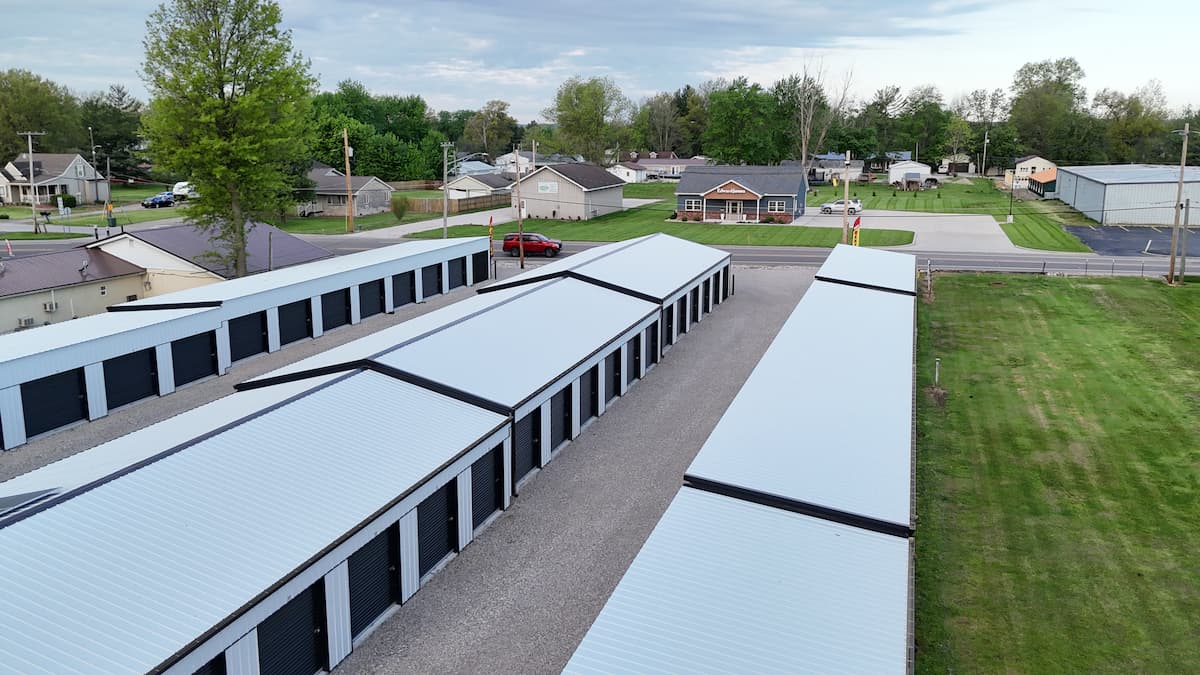
Life Storage, now operating under the Extra Space Storage brand following its acquisition, maintains a significant presence in Spokane with facilities serving the Inland Northwest's growing population along major corridors including Division Street and Sprague Avenue. Spokane's self-storage market benefits from steady population growth, but the city's climate, characterized by cold winters with significant snowfall, wet springs, and warm dry summers, creates roofing conditions that differ from the wetter west side of the Cascades while still demanding serious attention to moisture and biological growth.
Moss and biological growth are meaningful challenges on Spokane storage roofs, though the seasonal pattern differs from Seattle. Spokane receives roughly 16 inches of precipitation annually, less than half of Seattle's total, but the concentration of that moisture in fall, winter, and spring, combined with cool temperatures that extend the drying time after each event, creates enough sustained surface wetness to support moss growth on roof surfaces that face north or are shaded by parapets. Storage facilities near Spokane's tree-lined residential neighborhoods or in the Spokane Valley's mature commercial corridors accumulate organic debris that accelerates biological establishment.
Spokane's winter snowfall averages around 40 to 50 inches per season, with individual events that can deposit 10 to 15 inches at a time. Self-storage roofs in Spokane must be designed for the ground snow load specified by Washington State building code, and the insulation and drainage systems must handle the melting phase of that snow load, which can generate significant water volumes over a multi-day thaw, as reliably as they handle the accumulation phase. Interior freeze-thaw cycles at penetrations, parapet walls, and curb flashings are a significant source of progressive leak development on older Spokane storage buildings.
Single-ply TPO membranes installed over polyisocyanurate insulation are well suited to Spokane's climate when specified with cold-temperature flexibility ratings. The dry summer months from July through September provide an ideal window for re-roofing projects, and contractors in Spokane plan their largest commercial projects around this window to take advantage of predictable weather and warm temperatures that support good adhesive and sealant cure times. Fall installation of TPO requires careful attention to membrane temperature during welding, as cool ambient temperatures can affect heat-weld seam quality if the contractor does not adjust technique accordingly.
Large self-storage campuses in Spokane often include a mix of older metal-panel buildings constructed in the 1980s and 1990s and newer tilt-up or steel-frame buildings with TPO or PVC membranes. The metal-panel buildings present specific re-roofing options: a retrofit recover board and TPO system over the existing panels avoids tear-off costs and adds insulation value while correcting the drainage and ventilation deficiencies common in older exposed-fastener metal roofs. Washington State Energy Code requires a minimum above-deck insulation R-value that most 1980s-era metal buildings do not meet, making a full recover system that adds polyiso insulation an energy-code compliance project as well as a weatherproofing upgrade.
Drainage on Spokane storage roofs requires attention to both the rain and snowmelt scenarios. During spring melt events, a large roof can shed significant water volume in a short time as temperatures climb above freezing. Scuppers and interior drains should be sized to handle combined snowmelt and rainfall volumes that can occur during Spokane's Chinook wind events, when temperatures can rise 20 to 30 degrees in hours. Drain strainers should be checked in early spring before melt season to ensure they are clear of debris that accumulated under winter snow cover.
Seismic zone awareness applies in Spokane, though the city's seismic risk is lower than the Puget Sound region. Rooftop HVAC equipment on storage facilities should still be anchored with proper seismic-rated curbs per Washington State Building Code requirements, and mechanical equipment replacements during re-roofing projects present an efficient opportunity to upgrade older non-seismic equipment supports to current standards without additional mobilization cost.
Tenant protection during a Spokane re-roofing project involves managing both the weather risk and the operational disruption of a multi-building campus. Contractors should provide the facility manager with a building-by-building schedule at least two weeks in advance, clearly identifying which buildings will be under active construction on which dates. This allows the manager to notify affected tenants, restrict access to specific aisles, and make arrangements for high-value items if tenants wish to temporarily move them to a building not under construction.
Preventive maintenance programs for Spokane self-storage roofs should include a pre-winter inspection in October, before the first significant snowfall, to verify drain strainers, check curb flashing integrity, and identify any membrane areas that should be repaired before freeze-thaw cycling begins. Spring inspections after the final snowmelt in April or May should document any damage that developed over winter and prioritize repairs before the summer re-roofing season arrives.
- What is the average snowfall in Spokane and how does it affect storage roof design?
- Spokane averages 40 to 50 inches of snowfall annually. Storage roof structural design must account for the ground snow load specified in Washington State code, and drainage systems must handle large snowmelt volumes during spring thaw events.
- Is a recover system over existing metal panels a viable re-roofing option for older Spokane storage buildings?
- Yes. Installing a recover board and single-ply membrane over existing metal panels avoids tear-off costs, adds insulation to meet current Washington State Energy Code requirements, and corrects drainage deficiencies common in older exposed-fastener metal roofs.
- What time of year is best for re-roofing a Spokane self-storage facility?
- July through September is the optimal window, offering predictable dry weather, warm temperatures that support adhesive cure, and low precipitation risk. Fall installation is possible but requires additional attention to cold-temperature welding technique.
- How does moss grow in Spokane's relatively dry climate?
- Although Spokane receives less total rainfall than western Washington, fall through spring precipitation combined with cool temperatures that extend surface drying time creates enough sustained wetness on shaded or north-facing roof areas to support moss establishment, particularly where organic debris accumulates.
- Are seismic-rated equipment supports required on Spokane storage rooftops?
- Yes. Washington State Building Code, based on ASCE 7, requires seismic anchorage for all rooftop mechanical equipment. While Spokane's seismic hazard is lower than the Puget Sound region, code requirements still apply and are best addressed during equipment replacement projects.