

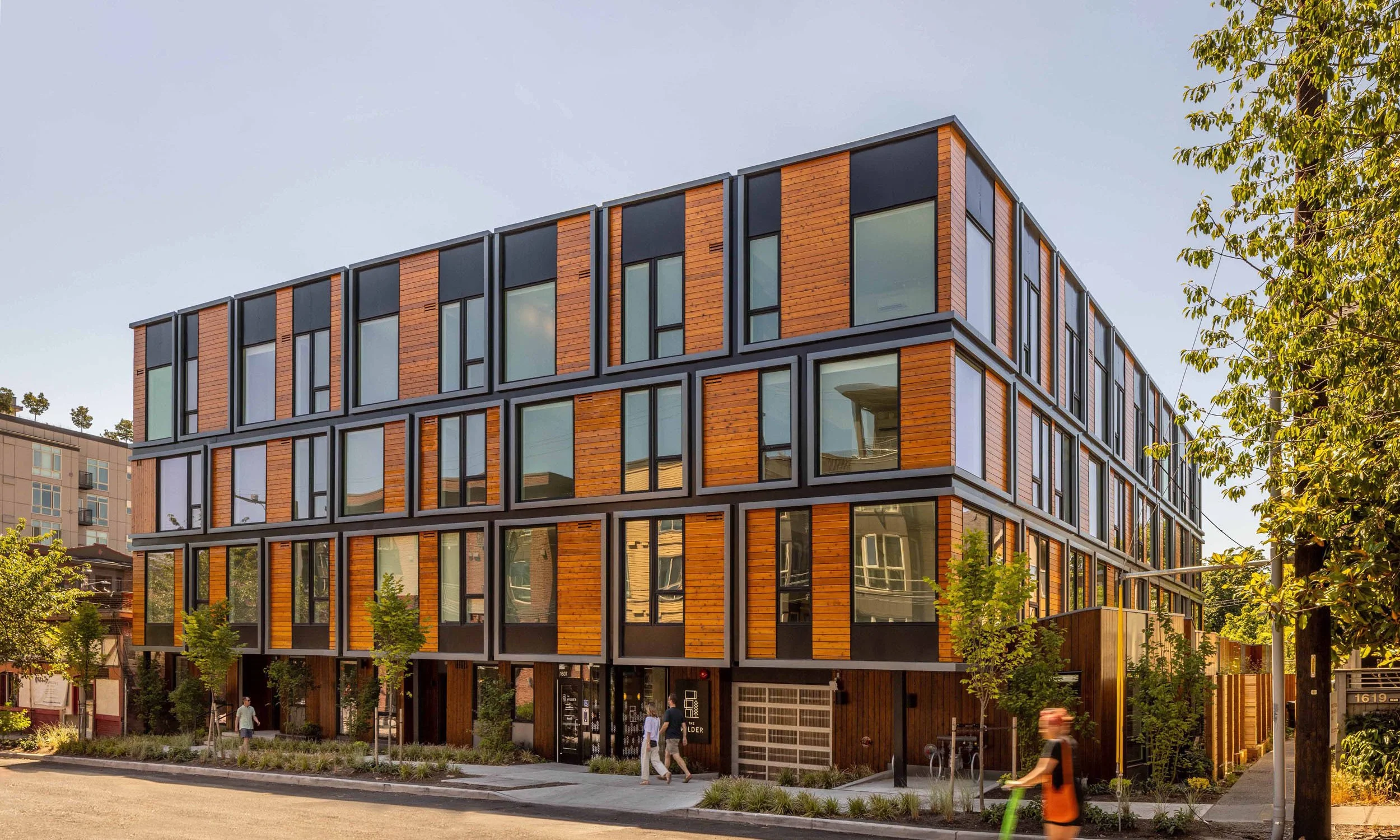
Spokane's multifamily real estate market has expanded steadily as remote workers and investors from Seattle and the West Coast have discovered what Eastern Washington residents have known for years, that Spokane offers genuine livability at a fraction of the cost of Puget Sound markets. Property management companies now oversee apartment portfolios spanning vintage walk-up buildings near Gonzaga University and Whitworth, newer suburban complexes in the Spokane Valley, and HOA-governed condo communities throughout the South Hill and North Side neighborhoods. Across all of these property types, roofing must perform under a climate that delivers significant snow loads in winter, wind-driven precipitation events, and hot, dry summers, a combination that challenges roofing systems in ways that neither coastal Pacific Northwest nor Great Plains climate alone would produce.
Spokane's position in the Inland Northwest means apartment buildings face a winter roofing threat that Seattle properties rarely deal with: significant snow accumulation and the associated structural loading and ice formation. Buildings along the South Hill, in neighborhoods like Comstock and Manito, and older complexes near the downtown core carry flat or low-slope roof designs that were engineered to the snow load requirements of their construction era, which in many cases means 1960s and 1970s code standards that do not reflect the design loads recognized in more recent building codes. Property managers who notice visible deflection in flat roof sections after heavy snow events should treat that as a structural alert, not just a cosmetic concern, and commission engineering review before the next major snowfall season.
The Gonzaga University and Whitworth University neighborhoods contain a concentration of older apartment buildings whose business model depends on consistent student occupancy. Landlords managing these properties operate on thin margins where a roofing failure during the academic year, triggering habitability complaints, Washington State landlord-tenant law responses, and emergency repair costs at winter premium rates, can turn a profitable asset into a problem property. Our annual inspection and maintenance program for Spokane student-adjacent rental properties is timed specifically to the academic calendar, with a comprehensive fall inspection and any identified repairs completed before October enrollment, and a post-winter inspection completed in April before lease renewal cycles begin.
HOA-managed condominium associations throughout South Hill, Spokane Valley, and Liberty Lake represent a growing segment of Spokane's multifamily housing supply. These associations, often governing attached townhome communities or converted apartment buildings, face capital planning challenges that are intensified by Spokane's climate: snow removal costs, ice dam mitigation, and the accelerated membrane aging that comes from wide seasonal temperature swings between summer highs above 100 degrees and winter lows below zero. Reserve studies for Spokane-area HOAs must account for the shorter effective membrane life that this climate imposes, and boards that use national average useful-life assumptions without local climate adjustment are likely to find themselves underfunded when replacement time arrives.
Real estate investors acquiring apartment properties in Spokane's transitional neighborhoods, the Perry District, Peaceful Valley, and parts of the East Central neighborhood, are drawn by price points and cap rates that are increasingly difficult to find in larger Pacific Northwest markets. These acquisitions frequently involve older building stock with deferred capital maintenance, and roofing is consistently among the three capital items that most significantly affect post-acquisition operating budgets. Our pre-acquisition assessments for Spokane apartment properties include snow load evaluation, insulation R-value assessment, and drainage capacity review, factors specific to Spokane's climate that standard visual inspections don't address and that buyers from milder markets frequently overlook.
The Spokane Valley and Liberty Lake suburban apartment corridors have seen significant new construction activity, and the roofing systems on these newer properties carry manufacturer warranties that require specific maintenance activities to remain enforceable. Property management companies taking over newly built Spokane Valley apartment communities should immediately establish warranty documentation practices, recording all maintenance inspections, repair activities, and product applications in the manufacturer's required format. Failing to maintain warranty documentation is the most common reason commercial roofing warranties become unenforceable at the time of a claim, and it's entirely preventable with a structured maintenance program from day one of a management engagement.
Spokane's summer wildfire smoke season, a reality of Inland Northwest living that has intensified over the past decade, affects roofing maintenance scheduling in a specific way. August and September, when air quality index levels frequently reach unhealthy or hazardous ranges, present occupational safety challenges for roofing work that requires significant physical exertion at elevation. field crews follow air quality monitoring protocols during wildfire smoke events and suspend non-emergency exterior work when AQI levels exceed established safety thresholds, a practice that may delay project schedules but protects both workers and the building owners who would otherwise face liability exposure for contractor worker safety violations.
Large apartment communities along the Division Street and North Side corridors, including properties near Shadle Park and the Northpointe area, represent stable, long-held rental assets that are often managed by generational family ownership or regional investment groups. These owners typically have maintenance relationships going back years and value reliability and honest condition reporting over aggressive upselling. Our approach to long-term clients in this segment is transparent condition assessment, conservative replacement recommendations timed to actual performance decline rather than arbitrary cycles, and competitive pricing that reflects an understanding that these are long-term relationships, not single-transaction engagements.
Spokane multifamily and HOA property owners deserve roofing contractors who understand the specific demands of the Inland Northwest climate, snow loads, wide seasonal temperature swings, summer wildfire smoke constraints, and the ice formation risks that Eastern Washington winters impose. Whether your portfolio includes historic apartments near Gonzaga, student housing near Whitworth, or suburban communities in Liberty Lake, our commercial roofing team brings the climate experience and professional discipline that Spokane property management requires.
- What snow load concerns should Spokane apartment owners be aware of regarding their roofing systems?
- Flat and low-slope roofs on older Spokane apartment buildings may have been engineered to snow load standards lower than those recognized in current building codes, and visible deflection in roof sections after heavy snowfall events should be treated as a potential structural concern requiring engineering evaluation before the next snow season. When we scope replacement projects on older Spokane flat-roof buildings, we review available structural documentation and flag any indicators of load path concerns for follow-up by a licensed structural engineer.
- How do Spokane's wide seasonal temperature swings affect roofing membrane selection?
- The swing between Spokane's summer temperatures above 100 degrees Fahrenheit and winter lows below zero creates extreme thermal cycling that accelerates membrane aging, particularly at seams, lap joints, and terminations. Modified bitumen and TPO systems with enhanced flexibility ratings for low-temperature performance outperform standard materials in this climate, and we specify products certified for cold-temperature flexibility that maintain seam integrity through Spokane's winter temperature range rather than specifying products designed for more moderate climates.
- Why should HOA reserve studies for Spokane-area associations use locally adjusted useful-life assumptions?
- National average useful-life estimates for roofing systems are based on representative climates that do not reflect the combined UV intensity, snow loading, and temperature extremes that Spokane's climate imposes. Reserve studies using national averages will systematically underestimate replacement frequency and underfund roofing reserve categories for Spokane-area HOAs, and we can provide condition-based remaining useful life assessments that allow reserve analysts to calibrate their projections to the actual condition and expected performance of the specific building's roofing system.
- Do you provide maintenance services that keep manufacturer warranties enforceable on newer Spokane apartment buildings?
- Yes, our warranty maintenance service for newer apartment properties maintains the documented inspection and maintenance records that manufacturers require to keep commercial roofing warranties enforceable. We track the specific maintenance requirements of each installed system, execute required activities on the manufacturer's prescribed schedule, and maintain documentation in the format required for warranty claim submissions, which is the exact documentation gap that causes most commercial roofing warranty claims to be denied.
- Do you suspend work during wildfire smoke events in Spokane?
- Yes, field crews follow air quality monitoring protocols and suspend non-emergency exterior work at elevation when AQI levels in the Spokane area reach unhealthy ranges during wildfire smoke events. We monitor daily air quality index forecasts during the August-September smoke season and communicate proactively with project managers about any schedule impacts, providing revised completion projections as conditions allow work to resume.