

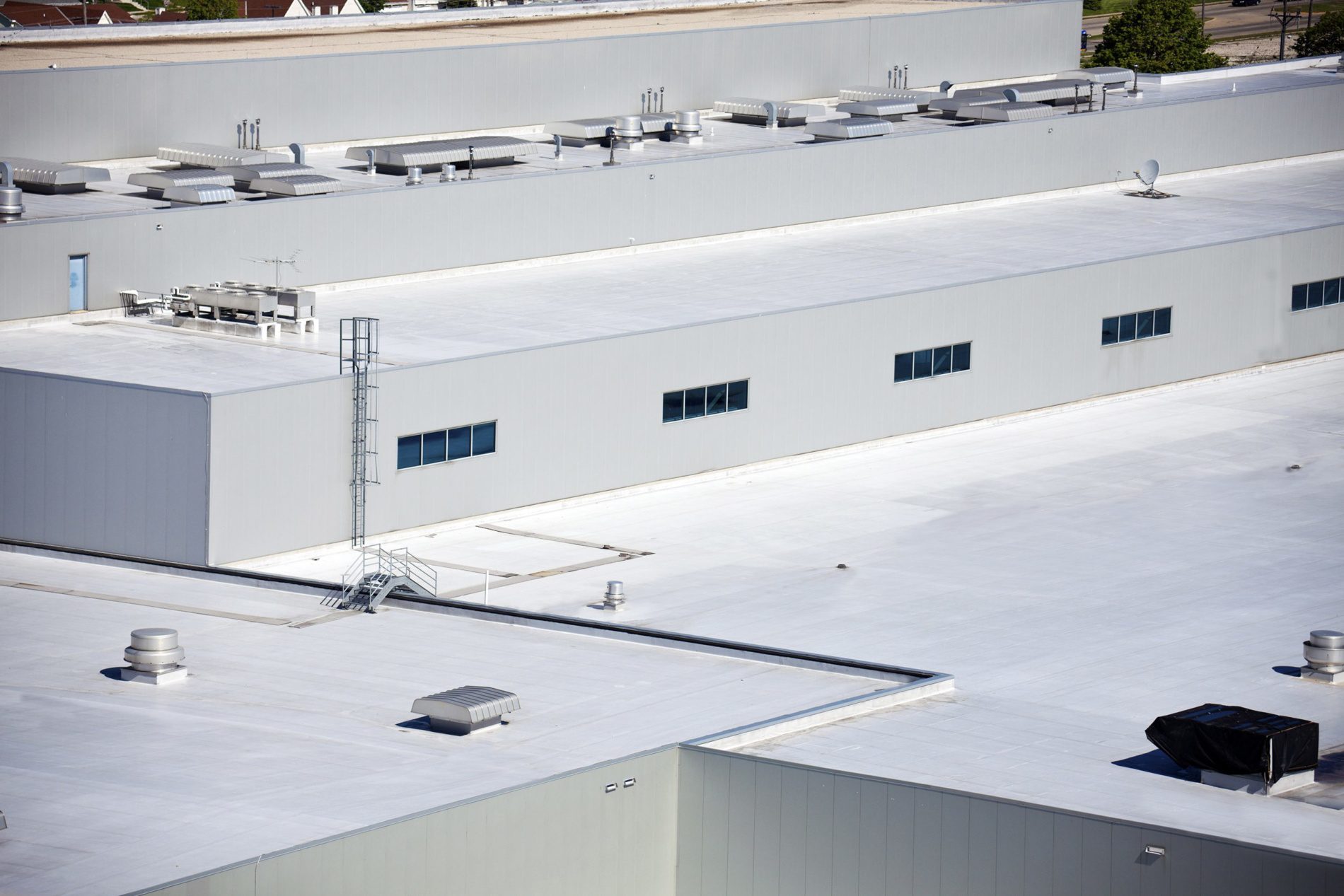
Kaiser Aluminum operates a significant rolling mill and fabrication facility in the Spokane Valley, part of a broader industrial economy that also includes food processing, aerospace component manufacturing, and wood products operations scattered across eastern Washington's Inland Northwest region. Spokane's manufacturing roofing market is defined by the intersection of heavy industrial process loads, a continental climate with genuine extremes in both directions, and facilities whose age ranges from postwar concrete-panel construction to modern tilt-up buildings requiring very different technical approaches. A roofing contractor in Spokane must be versatile enough to handle all of it.
Aluminum rolling and fabrication generates intense heat at floor level, with process temperatures that drive significant thermal stratification inside production bays. This internal heat load accelerates membrane aging on roof sections directly above furnaces and rolling equipment, creating differential degradation patterns where sections above hot processes age faster than adjacent sections above cooler areas. We perform infrared surveys that map these thermal zones and design maintenance schedules accordingly, prioritizing inspection and recoating of heat-stressed sections before they develop the delamination that leads to moisture intrusion.
Chemical exposure in Kaiser's rolling operations comes from rolling lubricants, annealing furnace exhaust, and scale inhibitors used in the aluminum forming process. These compounds, vented through rooftop stacks, create a chemical deposit environment that challenges standard membrane flashings. We specify fluoropolymer-coated aluminum flashing and chemically resistant EPDM or TPO curb coverings in process exhaust zones, then schedule quarterly cleaning of stack-base areas to prevent chemical accumulation from reaching concentrations that degrade membrane adhesion.
Vibration from rolling mills is among the most severe of any manufacturing process. Kaiser's rolling equipment operates under significant tonnage and produces rhythmic vibration that propagates structurally at frequencies that match certain roofing fastener failure modes. We conduct pre-installation pull-out tests in all areas above rolling equipment to establish actual deck substrate resistance, then design fastening patterns using factory-mutual test data for the measured resistance rather than defaulting to standard spacing assumptions that may overestimate performance.
Spokane's climate delivers a genuine four-season roofing challenge. Cold winters with sustained below-zero temperatures require membrane cold-temperature flexibility and ice dam prevention strategies, while hot dry summers drive thermal expansion and UV exposure comparable to desert climates. We select systems that perform at both extremes: TPO with high-reflectivity surface for summer cooling and certified cold-temperature flexibility for winter performance, installed with expanded joint details that accommodate the full annual thermal movement range.
Snow management is a structural and operational concern on Spokane industrial roofs. The Inland Northwest receives moderate but wet snowfall, and industrial rooftops with multiple mechanical units create significant drift accumulation zones. We design drainage outlets at each low point between equipment clusters and specify snow guard systems at valleys where slide-off would endanger personnel or equipment below. Pre-season inspections check drain clearance and overflow scupper condition before the first significant snowfall of each year.
Many of Spokane's older industrial buildings in the West Plains and Valley districts have original built-up roofing systems installed in the 1960s and 1970s that have been patched rather than replaced through multiple ownership cycles. These assemblies often contain multiple membrane layers with unknown moisture content between them. We use core sampling and infrared thermography to map the moisture profile of these roofs before recommending recover versus tear-off, presenting facility owners with cost-benefit analyses that account for the structural risk of leaving wet insulation in place under a new membrane.
Skylights in Spokane's industrial buildings were often installed as energy code compliance measures in the post-1970s period and now present aging curb and glazing systems. Metal-framed single-pane polycarbonate panels common in Valley industrial parks have aged beyond their design life and exhibit condensation, cracking, and seal failure. We replace these systematically using thermally broken curb assemblies and multi-wall polycarbonate glazing that maintains the original light-transmission function while meeting current thermal requirements.
Spokane's growing food processing sector,from regional dairy operations to large-scale grain handling,introduces high-humidity interior environments that create vapor drive challenges for roofing assemblies. When warm, moist interior air migrates upward through a roof assembly into cold insulation zones, condensation occurs within the assembly, degrading insulation performance and eventually reaching the deck. We design vapor retarder placement based on Spokane's climate zone calculations, ensuring the dew point falls outside the assembly rather than within it.
- How do rolling mill vibrations affect roofing system longevity?
- Rhythmic vibration from heavy rolling equipment fatigues mechanical fasteners over time; we conduct pre-installation pull-out tests to measure actual deck resistance and specify fastening densities and patterns based on measured values rather than standard assumptions.
- What membrane type performs best in Spokane's extreme temperature range?
- High-reflectivity TPO with certified cold-temperature flexibility ratings performs well across Spokane's full temperature range; installation with expanded joint details accommodates the large annual thermal movement that would crack rigid flashings in this climate.
- When is roof tear-off preferable to recover on old Spokane industrial buildings?
- Core sampling and infrared thermography determine wet-insulation extent; when moisture is widespread or structural deck deterioration is present, tear-off is required regardless of cost; otherwise, recover over dry sections is viable and retains existing thermal performance.
- How are vapor drive problems managed in Spokane's food processing facilities?
- Vapor retarder placement is calculated based on Spokane's climate zone data, positioning the retarder so the dew point falls outside the assembly and condensation cannot form within the insulation layer during winter heating season.
- What snow management measures are important for Spokane industrial rooftops?
- Drainage outlets between equipment clusters, overflow scuppers at all low points, snow guard systems at valleys where slide-off could endanger personnel, and pre-season drain-clearance inspections are all standard practice for Spokane industrial roof maintenance programs.