

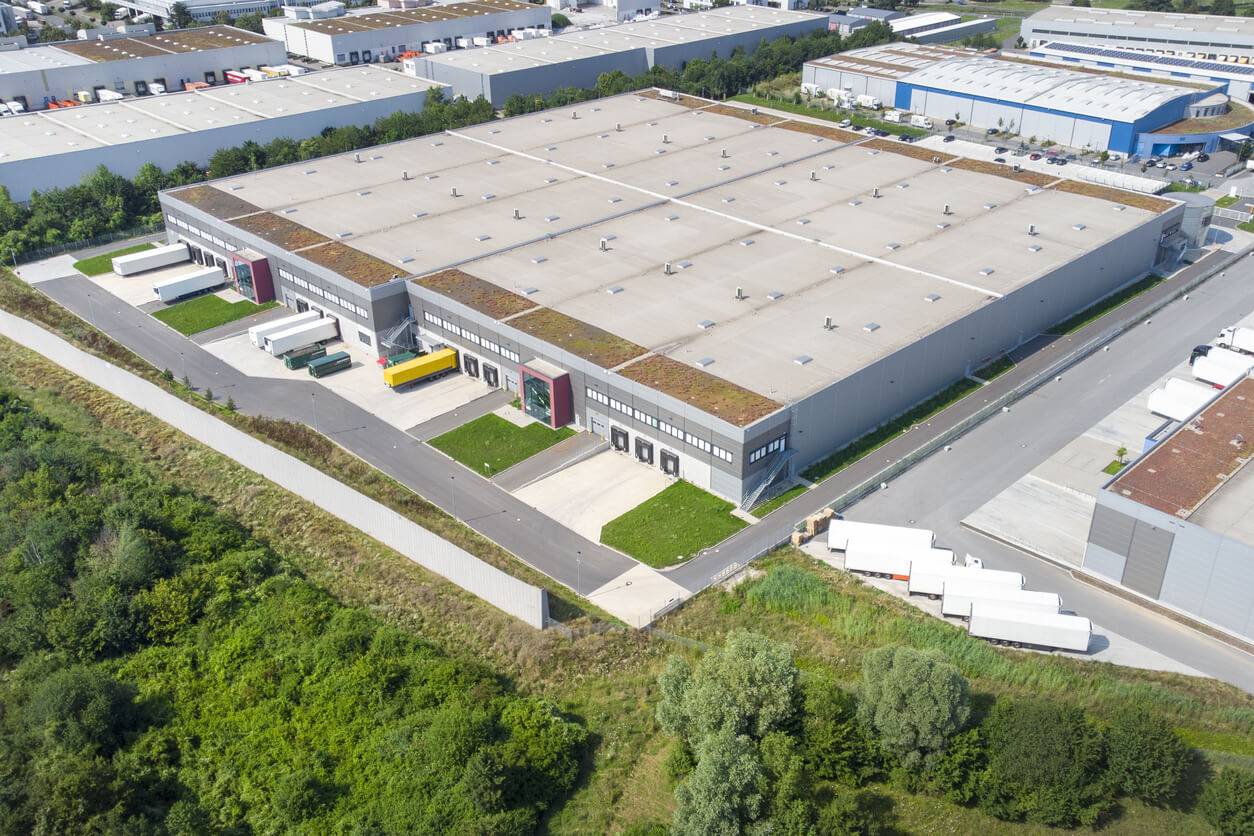
Spokane occupies a unique position in the Pacific Northwest industrial economy: it is the inland hub of a vast region that stretches from eastern Washington and northern Idaho through western Montana, serving as the logistics, manufacturing, and distribution center for an agricultural and industrial heartland that most West Coast cities rarely think about. The city's position on the I-90 corridor, the most direct land route between Seattle and Chicago through the northern tier, has made it a critical node in national supply chains, and the industrial buildings that support those supply chains must be built and maintained to survive the harsh inland climate that Spokane experiences without the moderating influence of Pacific marine air. Forty-eight inches of annual snowfall, genuine freeze-thaw cycling, and summer temperatures that routinely exceed 90°F create a roofing environment that demands more from system design and maintenance than most Pacific Northwest markets require.
BNSF's intermodal yard in Spokane is one of the most important rail logistics facilities in the inland Northwest, connecting Pacific Coast ports to the interior of the continent along a high-capacity rail corridor. The warehouse, transloading, and logistics buildings associated with intermodal rail operations are large-footprint, high-clearance structures with flat or low-slope roofing systems that must perform year-round in Spokane's climate extremes. Rail-adjacent industrial buildings face vibration from passing trains that stresses membrane seams and penetration flashings through constant cyclic loading, a degradation mechanism that is slow but cumulative, and that contributes to premature seam fatigue if the roofing system was not designed and installed with adequate lap widths and seam quality.
Kaiser Aluminum's Trentwood rolling mill, located in the Spokane Valley east of the city, is one of the most significant heavy industrial facilities in the inland Pacific Northwest. Aluminum rolling operations generate substantial process heat that creates demanding thermal conditions at roof level, and the combination of high interior temperatures and Spokane's cold winters creates extreme thermal gradients in the roof assembly that drive condensation and accelerate freeze-thaw cycling at the membrane level. Heavy industrial facilities like this also create vibration environments from rolling mill machinery that require roofing systems with adequate flexibility and seam strength to withstand cyclic mechanical loading over their full service lives.
Fairchild Air Force Base, located west of Spokane, is one of the Pacific Northwest's primary military installations and serves as the home base for Air Mobility Command tanker and transport aircraft. Federal construction at Fairchild follows Air Force Civil Engineering Center specifications and UFC roofing standards, which require documented system performance, quality assurance inspection, and detailed submittal packages that exceed standard commercial practice. Contractors servicing federal military installations in this region need to maintain current security clearance procedures for personnel, carry the bonding levels that federal construction contracts require, and understand the specific compliance documentation that UFC specifications demand.
The Spokane Industrial Park and surrounding east Spokane industrial corridors host a diverse mix of light manufacturing, distribution, food processing, and agricultural supply companies that collectively represent a large and growing industrial roofing market. The agricultural character of the surrounding region, eastern Washington's Palouse country is one of the world's most productive wheat and lentil growing regions, brings specific roofing demands to the grain elevators, food processing plants, and agricultural supply buildings that are integral to the regional economy. These structures must handle the dust and particulate environments associated with grain handling and processing, which can accumulate on roof surfaces and drainage systems in ways that accelerate membrane degradation if not addressed through regular maintenance programs.
Spokane's 17 inches of annual rainfall is modest for the Pacific Northwest, but it falls primarily in fall and winter and is augmented by the 48 inches of annual snowfall that defines Spokane's roofing challenge. Unlike Seattle's wet maritime snow, Spokane often receives drier continental snow that can accumulate to significant depths without the weight-per-inch that wet snow creates. However, the freeze-thaw cycling that Spokane experiences, temperatures regularly oscillating above and below 32°F throughout the winter months, is the most damaging long-term stress mechanism on flat industrial roofs here. Each freeze-thaw cycle expands and contracts moisture that has penetrated even micro-deficiencies in the membrane, progressively enlarging small openings into significant leak paths over months and years.
Eastern Washington's agricultural processing industry creates specialized roofing demands at potato processing facilities, onion packing houses, and grain storage and handling structures throughout the Spokane region. Potato and onion storage buildings must maintain precise temperature and humidity conditions to minimize product losses, which means the roofing system must provide both superior insulation values and an absolute vapor control layer that prevents moisture migration from the ambient exterior into the controlled storage environment. Roofing failures on agricultural storage facilities can directly affect product quality and generate product losses that far exceed the roofing repair cost, creating a compelling economic case for proactive maintenance and investment in higher-performance assemblies.
The thermal dynamics of Spokane's continental climate, hot, dry summers and cold, sometimes wet winters, create a biphasic stress pattern for industrial roofing systems. Summer UV exposure and thermal expansion stress the membrane surface and seams during the dry season; winter freeze-thaw and snow loading stress the same systems from opposite directions during the wet season. Systems that perform well in both environments typically feature reinforced membranes with documented flexibility at both temperature extremes, high-R-value insulation that moderates thermal swings at the membrane level, and drainage designs that handle both the summer convective thunderstorms (brief but intense) and the slow winter melt events that can create days-long water pooling on flat surfaces.
Spokane's roofing contractor market is smaller and less specialized than Seattle's, which means building owners planning major industrial roofing projects need to engage qualified contractors early and be prepared to accept longer lead times for complex system specifications. The most capable industrial roofing contractors in the Spokane market hold manufacturer certifications for the primary system types they install, maintain bonding capacity appropriate for large industrial projects, and have the supervision depth to manage multiple concurrent project phases. For projects requiring federal installation compliance, at Fairchild AFB or BNSF-adjacent federal facilities, additional contractor vetting and pre-qualification is often required before bids can be submitted.
Industrial building owners in the Spokane area who implement structured annual maintenance programs consistently report lower total roofing life-cycle costs than those who manage reactively. Given Spokane's climate extremes, the window between a minor roofing deficiency and a significant structural or interior moisture problem is shorter than in milder markets. A small seam opening that admits moisture before the first fall freeze can, through a winter's worth of freeze-thaw cycling, progress from a $500 repair to a $15,000 insulation replacement and deck repair project. Spring and fall inspections, timed to capture conditions after the winter stress season and before the next freeze cycle begins, are the most valuable scheduled maintenance investments available to Spokane industrial building owners.
Questions Owners Ask
How does Spokane's freeze-thaw cycling damage industrial roofing differently than Seattle's steady rain?
Freeze-thaw cycling is a mechanical degradation process rather than a chemical or moisture-volume one. When water infiltrates a micro-deficiency in a membrane, a hairline crack at a seam, a pinhole at a penetration flashing, or a small opening in a lap, and then freezes, it expands by approximately 9% and enlarges the opening. When it thaws, more water enters the enlarged opening before the next freeze cycle enlarges it further. Over a winter with dozens of freeze-thaw events, this process converts minor maintenance-deferred deficiencies into active leaks and can split seams that had been marginal but functional. Seattle's steady rain tests roofing through sustained moisture exposure; Spokane's freeze-thaw tests it through repeated mechanical stress. Both are capable of causing significant damage, but freeze-thaw tends to cause more rapid structural progression once it begins.
What snow load considerations apply to industrial buildings in Spokane?
Spokane's ground snow load is established in the Washington State Building Code and varies by location and elevation, but is generally 25–35 psf for the Spokane Valley floor. Flat or low-slope roofs that cannot shed snow must be designed to carry this load, and older buildings designed to earlier codes may have lower design capacities than current standards require. After significant snowfall events, particularly following wet snow or ice storms that add density to the accumulated load, building owners should monitor their roofs visually for signs of distress, noticeable deflection at midspan, cracking or popping sounds, or difficulty opening interior doors, and engage a structural engineer if any concerns arise. Having a pre-established relationship with a roof snow removal contractor before the season begins is advisable for buildings with flat roofs and limited structural margin above design snow load.
Are there specific roofing requirements for grain storage or agricultural processing buildings near Spokane?
Agricultural storage buildings, particularly controlled-atmosphere potato and onion storage facilities, have specific roofing requirements related to both insulation performance and vapor control. Interior storage temperatures for potatoes (38–42°F) and onions (32–35°F) create large winter temperature differentials across the roof assembly, driving significant moisture vapor pressure from the ambient exterior toward the cold interior, the reverse of the more common warm-interior scenario. This reverse vapor drive requires the vapor retarder to be positioned on the exterior side of the insulation (below the membrane) rather than the interior side, which is the opposite of standard practice for heated commercial buildings. Specifying a roofing consultant familiar with controlled-atmosphere agricultural storage buildings is advisable for any major reroofing project on these facilities, as the vapor control detailing is highly specific and incorrect placement can lead to chronic condensation and insulation degradation.
What should I look for when hiring a roofing contractor for a large industrial project in Spokane?
For large industrial projects in Spokane, the most important contractor qualifications are: manufacturer certification for the specific system proposed (which allows them to issue NDL warranty coverage and confirms factory training for their installers); bonding capacity appropriate to the project value; a documented history of similar-scale industrial projects in eastern Washington or the inland Northwest; and the supervision depth to manage a large project without relying solely on the principal of the firm. Given Spokane's smaller contractor market, verifying references directly, calling project owners and asking specific questions about schedule adherence, quality of installation, and responsiveness to punch-list and post-installation warranty issues, is essential. Lowest-bid contractors in a smaller market are sometimes competing outside their experience band, which creates execution risk on complex industrial projects.
How does rail vibration from the BNSF yard affect roofing maintenance requirements near Spokane's industrial corridors?
Buildings within several hundred feet of active rail lines experience low-frequency vibration from passing trains that, over years of daily exposure, creates cyclic fatigue stress in roofing system components. Seams and laps in mechanically fastened systems are most vulnerable because the vibration can loosen fasteners over time, reducing the clamping force that maintains seam integrity. Penetration flashings, pipe boots, equipment curbs, and drain sumps, can work loose from their adhesive or mechanical connections through vibration-induced movement. For buildings in rail-adjacent industrial parks, increasing inspection frequency to twice annually (rather than once) and specifically examining fastener tightness and seam integrity at each inspection provides early identification of vibration-induced degradation before it progresses to active leaks.